
Program
We are excited to present the schedule for the 23rd Dutch-Belgian DataBase Day (DBDBD 2026) on Friday 4 December 2026 in Delft. The workshop features keynote lectures, oral research sessions, and designated poster sessions.
The workshop schedule, keynote lectures, oral research sessions, and accepted posters are listed below.
☕ Lunch and the drinks reception take place at Café Labs — just across the street from the main venue (Stieltjesweg 226, Delft).
DBDBD attendees arriving early in Delft are invited to join the attendees of the Quantum Workshop for dinner at historic Stadsherberg De Mol (18:30).
Schedule • Friday 4 December 2026
| Session / Event | Time | Details & Presentations |
|---|---|---|
| Registration & Coffee | 08:30 – 09:00 | Badge pickup and morning coffee |
| Welcome and Opening | 09:00 – 09:10 | Rihan Hai Opening address from the local organizers |
| Session 1: Quantum Computing meets Computer Science Chair: Rihan Hai |
09:10 – 09:50 |
Keynote 1 Lieven Vandersypen (Chief Scientist of QuTech / TU Delft) Quantum computing – from fascination to technology
|
| 09:50 – 10:35 | Functional Aggregate Queries for Strong Simulation of Quantum Circuits
abstract
presentation
|
|
InferQ: A Database-Oriented Benchmark for Quantum Circuits Simulation SIGMOD 2027
abstract
presentation
|
||
QEC Model Zoo: Democratizing AI-enhanced Quantum Error Correction NeurIPS 2026
abstract
presentation
|
||
| Coffee Break | 10:35 – 11:05 | Coffee, refreshments & informal discussions |
| Session 2: AI & Quantum Systems Chair: Aditya Shankar |
11:05 – 11:45 |
Keynote 2 Paul Groth (Scientific Director, UvA Data Science Center / University of Amsterdam) The Knowledge Placement Problem
|
| 11:45 – 12:00 | Towards AI-Driven Financial Crime Detection IJCAI 2026
abstract
presentation
|
|
| Lunch | 12:00 – 13:30 | Networking lunch buffet & Poster Viewing at Café Labs |
| Session 3: Query Optimization, Compilation & Hardware Chair: Floris Geerts |
13:30 – 15:15 | Running Loops Around Recursive SQL VLDB 2026
abstract
presentation
|
Analyzing loop hoisting optimizations for recursive SQL queries
abstract
presentation
|
||
Integrating FastLanes into a JIT-Compiled GPU Query Engine
abstract
presentation
|
||
TRADE: Anomaly Detection in Sparse and Irregular Time Series
abstract
presentation
|
||
Underpass: Directing Regular Path Queries Around the Host in Near-Memory Processing
abstract
presentation
|
||
Property Graphs to Virtual RDF with Schema Reflection
abstract
presentation
|
||
Communication Lower Bounds for Parallel Query Processing under Data Distribution Policies
abstract
presentation
|
||
| Coffee Break | 15:15 – 15:45 | Coffee, refreshments & informal discussions |
| Session 4: AI, ML & Data Systems Chair: Asterios Katsifodimos |
15:45 – 16:30 | Neuro-Relational Programs: Unifying Queries and Neural Computation over Structured Data
abstract
presentation
|
MLSkip: Data Skipping for ML Filters via Lightweight Metadata VLDB 2026 Workshop
abstract
presentation
|
||
Tracking State Footprints: How Agents Can Transact
abstract
presentation
|
||
| 16:30 – 17:10 |
Keynote 3 Peter Boncz (Research Group Leader at CWI / VU Amsterdam) Data Systems Research in the age of AI
|
|
| Closing Remarks | 17:10 – 17:15 | Rihan Hai Closing address from the local organizers |
| Drinks Reception | 17:15 – 19:00 | Posters & Drinks Reception at Café Labs |
Accepted Posters
The accepted poster contributions will be presented during the designated poster sessions throughout the day. Poster presenters may mount their posters in the morning during registration, and posters remain accessible throughout all coffee and lunch breaks.
- Hyperdimensional Computing for Filtered Vector Search – Sebastián Bugedo, Stijn Vansummeren (Hasselt University) abstract
- SQL Valley: Interactive and Self-Directed SQL Learning Through Skill Trees – Hildo Bijl (TU Eindhoven) abstract
- Distributed Query Evaluation Over Constrained Database – Avi Tomar (Vrije Universiteit Brussel) abstract
- Formal Explanations for LLM-Based Schema Matching – Dante Pinto Araya, Len Feremans, Frank Neven, Marcel Parciak, Stijn Vansummeren (Hasselt University) abstract
- Co-Designing AI Assistants for Research Data Management Through Interactive Support Sessions – Eva Eleonora Ferradosa, Christoph Lofi (TU Delft) abstract
💡 Poster presenters may mount their posters during morning registration. Posters remain accessible throughout all coffee and lunch breaks.
Invited Keynote Talks
The workshop will feature three keynote presentations by leading researchers:
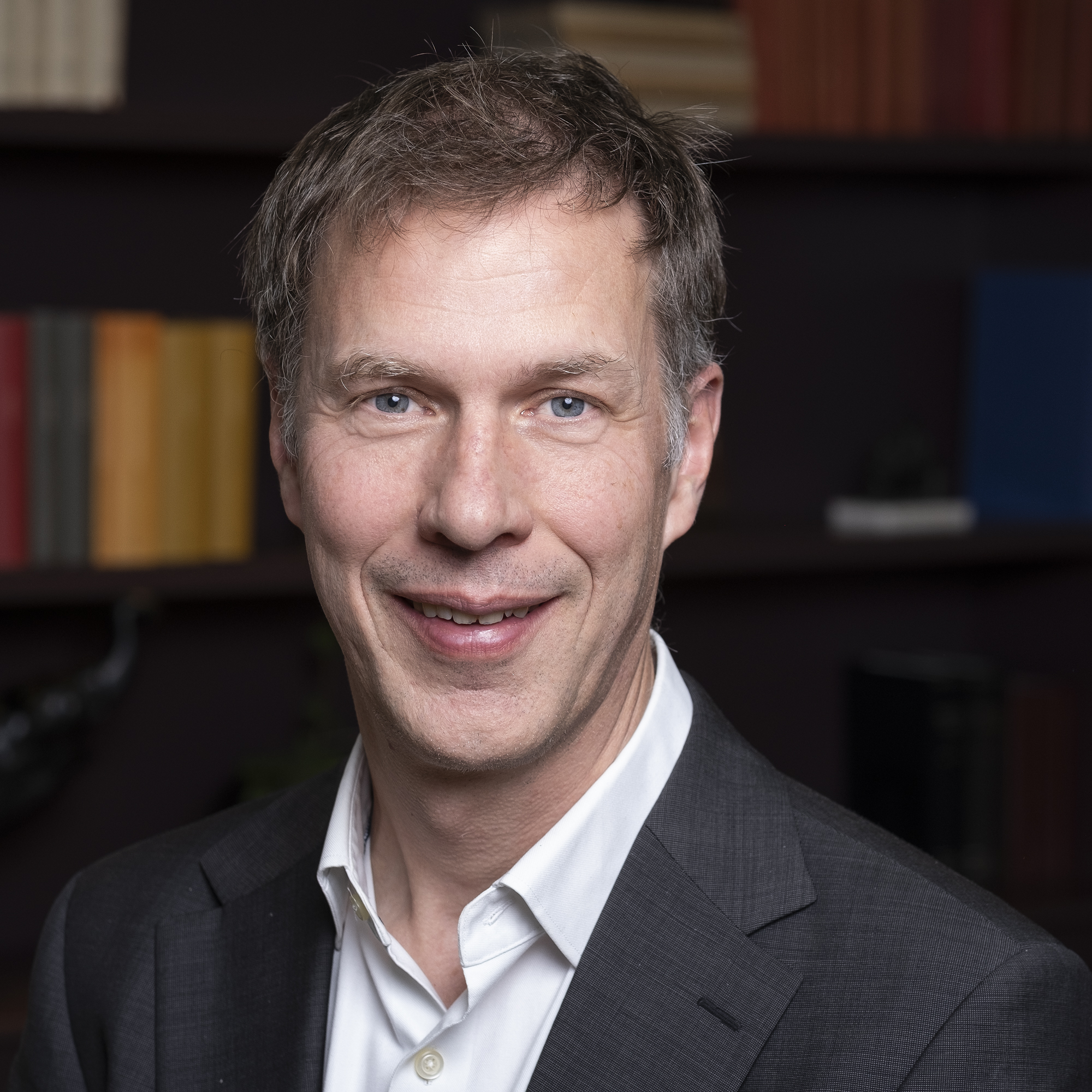
Lieven Vandersypen
Lieven Vandersypen received his PhD in Electrical Engineering from Stanford University (2001), where he famously demonstrated Shor's quantum algorithm for finding the prime factors of fifteen. Since 2006, he has been Antoni van Leeuwenhoek professor at TU Delft, where he leads a group that pioneered quantum computing based on electron spins in semiconductor quantum dots. His work focuses on devising novel building blocks for large-scale quantum dot spin qubit processors. Vandersypen has received Starting, Synergy and Advanced grants from the European Research Council, and is a fellow of the American Physical Society. He is a member of the Royal Netherlands Academy of Arts and Sciences and received the Spinoza Prize, the highest scientific award in the Netherlands.
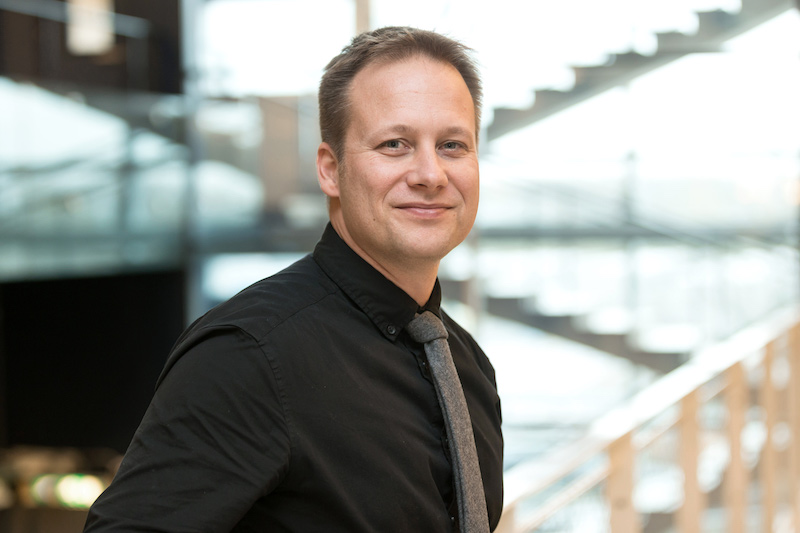
Paul Groth
Abstract: Knowledge in modern AI systems resides in many substrates: model weights, prompts and context windows, retrieval indexes, agent memories, knowledge graphs and databases, callable tools, and people. Foundation models have expanded our ability to make knowledge machine-usable and to extract, transform, and transfer it between representations. Yet these transformations are costly and lossy. Deciding which knowledge belongs where, and when it should move, is now a pervasive design problem, addressed through fine-tuning, retrieval, editing, memory, and extraction. These decisions are often guided by trial and error, software defaults, and intuition, resulting in knowledge infrastructures that can be brittle, difficult to audit, and expensive to maintain. In this talk, I frame the knowledge placement problem as a central challenge for data systems and outline a research agenda for understanding how placement decisions shape the reliability, cost, provenance, and maintainability of AI systems.
Biography: Paul Groth is Professor of Algorithmic Data Science at the University of Amsterdam, where he leads the Intelligent Data Engineering Lab (INDElab) and serves as scientific director of the UvA Data Science Center. He holds a Ph.D. in Computer Science from the University of Southampton (2007) and has conducted research at the University of Southern California, Vrije Universiteit Amsterdam, and Elsevier Labs. His research focuses on intelligent systems for dealing with large amounts of diverse, contextualized data with a particular emphasis on web and science applications, including data provenance, data integration, and knowledge graphs. Groth co-chaired the W3C Provenance Working Group that developed the PROV standard and contributed to the FAIR data principles.
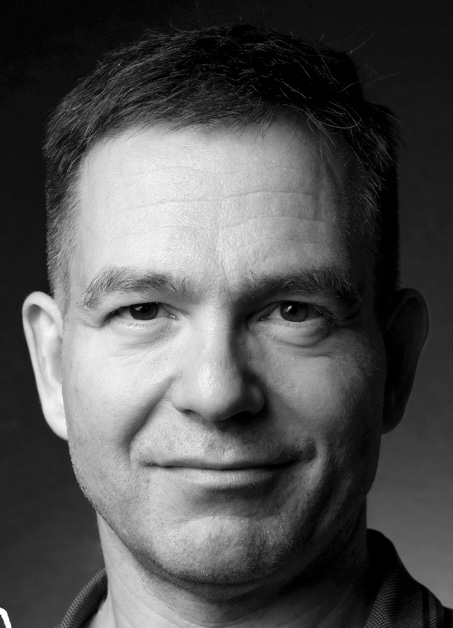
Peter Boncz
Abstract: In this talk I will share my perspective on what makes data systems research valuable and interesting, and how AI is impacting our research area. The talk will be both high-level and visit shortly concrete ongoing research projects at CWI. The topics discussed will range from the changing landscape of data-intensive software architectures to new data types and query functionality, new forms of storage and query execution, the use of non-CPU hardware and changing ways of doing science in the age of AI.
Biography: Peter Boncz holds appointments as tenured researcher at CWI and professor at VU University Amsterdam. His academic background is in database systems, with the open-source column-store MonetDB the outcome of his PhD. He has a track record in bridging the gap between academia and commercial application, founding multiple startups. In 2008 he co-founded Vectorwise around the analytical database system by the same name, which pioneered vectorized query execution, and lightweight data compression; which have been adopted broadly in analytical database systems. Recent work to make data (de)compression data-parallel and AI/GPU-friendly led to the FastLanes data format. In recent years he has collaborated closely with both Databricks and with MotherDuck, a startup that is connecting DuckDB to the cloud. DuckDB originates from the Database Architectures research group, which he leads at CWI — the Amsterdam research institute where also python was created.